The Death of a Good Man
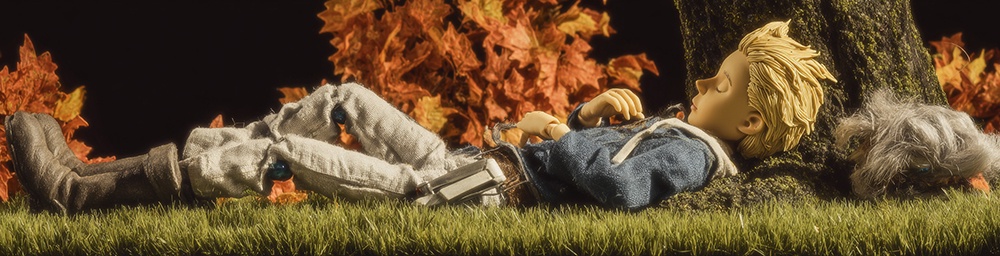
‘The horn of Boromir!’ he cried. ‘He is in need!’ He sprang down the steps and away, leaping down the path. ‘Alas! An ill fate is on me this day, and all that I do goes amiss.’
Three Rings for the Elven-kings under the sky, Seven for the Dwarf-lords in their halls of stone, Nine for Mortal Men doomed to die, One for the Dark Lord on his dark throne In the Land of Mordor where the Shadows lie. One Ring to rule them all, One Ring to find them, One Ring to bring them all and in the darkness bind them In the Land of Mordor where the Shadows lie.
The Muse tonight is live concert performance of music from Peter Jackson's Lord of the Rings. It is no doubt a moving performance. And so, I am inspired to revisit Middle Earth on my own terms by listening to the soundtrack and eventually watching most of The Fellowship of the Ring.
There is little as beautiful in literature or cinema as Boromir's fall and Aragorn's heroism at the end of The Fellowship of the Ring. Chapter ten is appropriately named 'The Breaking of the Fellowship.'
Fellowship is my favorite kind of storytelling: disparate parties come together and cooperate in order to solve a problem none of the could achieve on their own. The power of cooperation.
I don't recall why I fell in love with Aragron and Baromir, I suppose they represented the ideal in my mind. Aragorn the rugged, disenfranchised scout with a heart full of good and principles that cost him a life of ease. Boromir, equally kind but more refined, and flawed by his desire to see his people protected. His goal was not self-serving but with the thought of circumstances beyond him. Both men, to one degree or another gave up a life they would choose.
Serving others over self. These men are heroes. As we should all desire to be.
So it was that in the concluding chapter of this rapturous first book that Tolkien shows us what these two men are really made of. Boromir, seemed to be the more reasonable, level headed of the two men. Where Strider was wild and untamed, Boromir was a soldier: disciplined and orderly, working as a public servant more than a rebel.
When he approaches Frodo alone in the glen of Rowan-trees, his intentions are for the best. He does not seek evil or wish harm upon Frodo. Such is the test of the One Ring. The test that Lady Galadriel had passed so beautifully, Boromir would fail.
It is a gut-wrenching confrontation. Completely reasonable from the soldier's point of view, and completely contrary to the meaning of the fellowship and antithetical to their goal to destroy this tool of Sauron.
His line to Frodo, 'Are you sure that you do not suffer needlessly?’ in trying to convince him to give Boromir the ring is practically Biblical, evoking the moment in Matthew chapter 16, version 21 when Peter encourages the Christ to be kind to himself.
The argument comes from a genuine place, but is flawed nonetheless. And as Christ rebuked Peter, Frodo denies Boromir.
As quickly as it begins, Boromir realizes, too late, the mistake he has made. It is stunningly beautiful that Tolkien allows us to see the true character of this man revealed by immediately acknowledging his faults and failings. No evil man could do this. Only GOOD men can see themselves objectively in the moment and realize they overstepped.
And just as quickly, we get to see the mettle of which Boromir is truly made when in the opening of The Two Towers he is the front line confronting the Uruk-hai, resulting in his destruction. Not punishment for his misgivings, the forgone conclusion of a man who was heroic in his heart. He lived in service of others and died the same.
I was twelve or thirteen when I discovered Fellowship after being completely lost in The Hobbit. I have been trying to find that lightening in a bottle ever since. I know I can never go home again, but oh!, how I wish I could feel that feeling of wonder and discovery one more time before I die.
However, if all I ever manage is to be heroic, level but flawed, or wild and untamed as a guide and protector, I will count my time here as a success.
What more should any of us ask.
The Fellowship of the Ring by J.R.R. Tolkien
Chapter 10, The Breaking of the Fellowship (excerpt)
Suddenly Frodo awoke from his thoughts: a strange feeling came to him that something was behind him, that unfriendly eyes were upon him. He sprang up and turned; but all that he saw to his surprise was Boromir, and his face was smiling and kind. ‘I was afraid for you, Frodo,’ he said, coming forward. ‘If Aragorn is right and Orcs are near, then none of us should wander alone, and you least of all: so much depends on you. And my heart too is heavy. May I stay now and talk for a while, since I have found you? It would comfort me. Where there are so many, all speech becomes a debate without end. But two together may perhaps find wisdom.’ ‘You are kind,’ answered Frodo. ‘But I do not think that any speech will help me. For I know what I should do, but I am afraid of doing it, Boromir: afraid.’ Boromir stood silent. Rauros roared endlessly on. The wind murmured in the branches of the trees. Frodo shivered. Suddenly Boromir came and sat beside him. ‘Are you sure that you do not suffer needlessly?’ he said. ‘I wish to help you. You need counsel in your hard choice. Will you not take mine?’ ‘I think I know already what counsel you would give, Boromir,’ said Frodo. ‘And it would seem like wisdom but for the warning of my heart.’ ‘Warning? Warning against what?’ said Boromir sharply. ‘Against delay. Against the way that seems easier. Against refusal of the burden that is laid on me. Against – well, if it must be said, against trust in the strength and truth of Men.’ ‘Yet that strength has long protected you far away in your little country, though you knew it not.’ ‘I do not doubt the valour of your people. But the world is changing. The walls of Minas Tirith may be strong, but they are not strong enough. If they fail, what then?’ ‘We shall fall in battle valiantly. Yet there is still hope that they will not fail.’ ‘No hope while the Ring lasts,’ said Frodo. ‘Ah! The Ring!’ said Boromir, his eyes lighting. ‘The Ring! Is it not a strange fate that we should suffer so much fear and doubt for so small a thing? So small a thing! And I have seen it only for an instant in the house of Elrond. Could I not have a sight of it again?’ Frodo looked up. His heart went suddenly cold. He caught the strange gleam in Boromir’s eyes, yet his face was still kind and friendly. ‘It is best that it should lie hidden,’ he answered. ‘As you wish. I care not,’ said Boromir. ‘Yet may I not even speak of it? For you seem ever to think only of its power in the hands of the Enemy: of its evil uses not of its good. The world is changing, you say. Minas Tirith will fall, if the Ring lasts. But why? Certainly, if the Ring were with the Enemy. But why, if it were with us?’ ‘Were you not at the Council?’ answered Frodo. ‘Because we cannot use it, and what is done with it turns to evil.’ Boromir got up and walked about impatiently. ‘So you go on,’ he cried. ‘Gandalf, Elrond – all these folk have taught you to say so. For themselves they may be right. These elves and half-elves and wizards, they would come to grief perhaps. Yet often I doubt if they are wise and not merely timid. But each to his own kind. True-hearted Men, they will not be corrupted. We of Minas Tirith have been staunch through long years of trial. We do not desire the power of wizard- lords, only strength to defend ourselves, strength in a just cause. And behold! in our need chance brings to light the Ring of Power. It is a gift, I say; a gift to the foes of Mordor. It is mad not to use it, to use the power of the Enemy against him. The fearless, the ruthless, these alone will achieve vic- tory. What could not a warrior do in this hour, a great leader? What could not Aragorn do? Or if he refuses, why not Boromir? The Ring would give me power of Command. How I would drive the hosts of Mordor, and all men would flock to my banner!’ Boromir strode up and down, speaking ever more loudly. Almost he seemed to have forgotten Frodo, while his talk dwelt on walls and weapons, and the mustering of men; and he drew plans for great alliances and glorious victories to be; and he cast down Mordor, and became himself a mighty king, benevolent and wise. Suddenly he stopped and waved his arms. ‘And they tell us to throw it away!’ he cried. ‘I do not say destroy it. That might be well, if reason could show any hope of doing so. It does not. The only plan that is proposed to us is that a halfling should walk blindly into Mordor and offer the Enemy every chance of recapturing it for himself. Folly! ‘Surely you see it, my friend?’ he said, turning now sud- denly to Frodo again. ‘You say that you are afraid. If it is so, the boldest should pardon you. But is it not really your good sense that revolts?’ ‘No, I am afraid,’ said Frodo. ‘Simply afraid. But I am glad to have heard you speak so fully. My mind is clearer now.’ ‘Then you will come to Minas Tirith?’ cried Boromir. His eyes were shining and his face eager. ‘You misunderstand me,’ said Frodo. ‘But you will come, at least for a while?’ Boromir persisted. ‘My city is not far now; and it is little further from there to Mordor than from here. We have been long in the wilderness, and you need news of what the Enemy is doing before you make a move. Come with me, Frodo,’ he said. ‘You need rest before your venture, if go you must.’ He laid his hand on the hobbit’s shoulder in friendly fashion; but Frodo felt the hand trembling with suppressed excitement. He stepped quickly away, and eyed with alarm the tall Man, nearly twice his height and many times his match in strength. ‘Why are you so unfriendly?’ said Boromir. ‘I am a true man, neither thief nor tracker. I need your Ring: that you know now; but I give you my word that I do not desire to keep it. Will you not at least let me make trial of my plan? Lend me the Ring!’ ‘No! no!’ cried Frodo. ‘The Council laid it upon me to bear it.’ ‘It is by our own folly that the Enemy will defeat us,’ cried Boromir. ‘How it angers me! Fool! Obstinate fool! Running wilfully to death and ruining our cause. If any mortals have claim to the Ring, it is the men of Nu ´menor, and not Halflings. It is not yours save by unhappy chance. It might have been mine. It should be mine. Give it to me!’ Frodo did not answer, but moved away till the great flat stone stood between them. ‘Come, come, my friend!’ said Boromir in a softer voice. ‘Why not get rid of it? Why not be free of your doubt and fear? You can lay the blame on me, if you will. You can say that I was too strong and took it by force. For I am too strong for you, halfling,’ he cried; and suddenly he sprang over the stone and leaped at Frodo. His fair and pleasant face was hideously changed; a raging fire was in his eyes. Frodo dodged aside and again put the stone between them. There was only one thing he could do: trembling he pulled out the Ring upon its chain and quickly slipped it on his finger, even as Boromir sprang at him again. The Man gasped, stared for a moment amazed, and then ran wildly about, seeking here and there among the rocks and trees. ‘Miserable trickster!’ he shouted. ‘Let me get my hands on you! Now I see your mind. You will take the Ring to Sauron and sell us all. You have only waited your chance to leave us in the lurch. Curse you and all halflings to death and dark- ness!’ Then, catching his foot on a stone, he fell sprawling and lay upon his face. For a while he was as still as if his own curse had struck him down; then suddenly he wept.
He rose and passed his hand over his eyes, dashing away the tears. ‘What have I said?’ he cried. ‘What have I done? Frodo, Frodo!’ he called. ‘Come back! A madness took me, but it has passed. Come back!’
There was no answer. Frodo did not even hear his cries. He was already far away, leaping blindly up the path to the hill-top. Terror and grief shook him, seeing in his thought the mad fierce face of Boromir, and his burning eyes.
We should all be so well written as to be able to see our mistakes and accept them as the flawed men we are.
“A mile, maybe, from Parth Galen in a little glade not far from the lake he found Boromir. He was sitting with his back to a great tree, as if he was resting. But Aragorn saw that he was pierced with many black-feathered arrows; his sword was still in his hand, but it was broken near the hilt; his horn cloven in two was at his side. Many Orcs lay slain, piled all about him and at his feet. Aragorn knelt beside him. Boromir opened his eyes and strove to speak. At last slow words came. ‘I tried to take the Ring from Frodo ‘ he said. ‘I am sorry. I have paid.’ His glance strayed to his fallen enemies; twenty at least lay there. ‘They have gone: the Halflings: the Orcs have taken them. I think they are not dead. Orcs bound them.’ He paused and his eyes closed wearily. After a moment he spoke again. ‘Farewell, Aragorn! Go to Minas Tirith and save my people! I have failed.’ ‘No!’ said Aragorn, taking his hand and kissing his brow. ‘You have conquered. Few have gained such a victory. Be at peace! Minas Tirith shall not fall!’ Boromir smiled. ‘Which way did they go? Was Frodo there?’ said Aragorn. But Boromir did not speak again. ‘Alas!’ said Aragorn. ‘Thus passes the heir of Denethor, Lord of the Tower of Guard! This is a bitter end. Now the Company is all in ruin. It is I that have failed. Vain was Gandalf’s trust in me. What shall I do now? Boromir has laid it on me to go to Minas Tirith, and my heart desires it; but where are the Ring and the Bearer? How shall I find them and save the Quest from disaster?’ He knelt for a while, bent with weeping, still clasping Boromir’s hand. So it was that Legolas and Gimli found him.”
2025-11-02 18:00:00 2026-08-14 14:45:24